
Fiber optic current sensors are revolutionizing the way electrical currents are measured, providing high sensitivity, immunity to electromagnetic interference (EMI), and the ability to function in harsh environments. This article will explore the principles behind fiber optic current sensors, examine the different types, and discuss their real-world applications in various industries.
Introduction to Optical Fiber Sensors
How Do Fiber Optical Sensors Work?
Fiber optic current sensors work by detecting changes in light as it interacts with a magnetic field created by an electrical current. These sensors rely on the Faraday Effect, which occurs when a magnetic field causes a rotation in the polarization of light passing through an optical fiber. This interaction allows the sensor to measure the strength and direction of the electrical current accurately.
The ability to measure the polarization shift gives fiber optic sensors a significant advantage in environments where traditional electrical sensors might fail, such as in high-voltage or electromagnetically noisy environments.
Features and Operating Principles
Fiber optic current sensors are renowned for their precision and versatility. Some key features that make these sensors stand out include:
- EMI Resistance: By transmitting data via light instead of electricity, fiber optic sensors inherently reject electromagnetic interference. This makes them perfect for applications where electrical interference can disrupt measurements.
- Non-contact operation: The sensors don’t need to physically touch the conductor, which eliminates safety concerns and reduces the risk of short circuits or malfunctions.
- High accuracy and reliability: Fiber optic current sensors provide highly accurate readings over a wide range of currents, making them ideal for applications requiring precision, such as power grids and industrial systems.
Structure
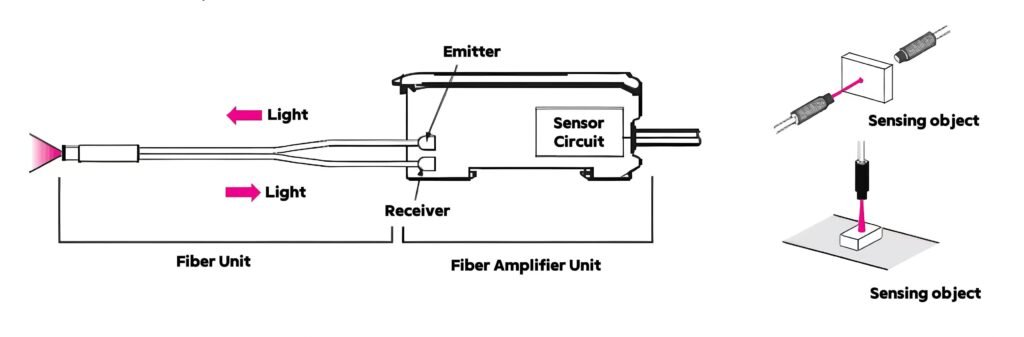
A typical fiber optic current sensor consists of the following components:
- Optical Fiber: The core component that transmits light through the fiber.
- Magnetic Field Sensing Element: This interacts with the magnetic field created by the electrical current.
- Detector and Analyzer: These components measure the changes in the light’s polarization and convert them into readable data, such as the current’s magnitude and direction.

The Three Fundamental Types of Optical Fiber Sensors
Fiber optic current sensors are categorized into three main types, each based on different optical principles. Let’s explore them in more detail.
1. Faraday Effect-Based Sensors
Faraday Effect-based sensors are the most common type of fiber optic current sensors. When light passes through an optical fiber, the magnetic field surrounding an electrical conductor rotates the light’s polarization. By measuring this rotation, the sensor can determine the current flowing through the conductor.
Fiber optic sensors excel in electrical power systems where accuracy and reliability are non-negotiable.
Example: In power plants, Faraday Effect-based sensors are used to monitor high-voltage transmission lines. They detect current fluctuations and ensure that the lines are operating safely and efficiently.
2. Magneto-Optic Sensors
Magneto-optic sensors rely on magnetic materials that change their optical properties when exposed to a magnetic field. These sensors are highly effective in extreme environments, such as high temperatures or high radiation, where traditional sensors might fail.
Magneto-optic sensors are often employed in applications such as aerospace, where equipment must withstand harsh conditions.
Case Study: A magneto-optic sensor was successfully deployed in a satellite system, where it monitored the currents in critical electrical components. The sensor’s resistance to radiation and its ability to operate in space’s electromagnetic environment ensured that the satellite’s power system functioned smoothly.
3. Fiber Bragg Grating (FBG) Sensors
Fiber Bragg Grating sensors use light that is reflected back from a specific wavelength within the fiber. When the fiber is exposed to a magnetic field, the reflected wavelength shifts, which can be analyzed to determine the current’s magnitude. FBG sensors are known for their high spatial resolution and ability to monitor current over long distances.
Example: In offshore wind farms, FBG sensors are used to monitor currents in power cables. By detecting shifts in the reflected light wavelength, operators can identify potential issues like power losses or overheating before they become critical.
Signal Transmission in Fiber Optic Sensing
Signal transmission in fiber optic current sensors is based on light traveling through optical fibers. When an electrical current flows through a conductor, it creates a magnetic field that influences the fiber. This interaction causes changes in the light’s properties, such as polarization or wavelength, which are then measured to calculate the current.
One of the key advantages of fiber optic sensors is that they can transmit signals over long distances without signal degradation, which makes them ideal for remote monitoring in places like underground installations, offshore platforms, or even space.
What Are the Applications of Fiber Optic Sensors?
Fiber optic current sensors are versatile and find applications across a broad spectrum of industries. Here are a few key examples:
1. Power Generation and Distribution
Fiber optic sensors are widely used in power plants and electrical grids to monitor the flow of current through transmission lines and transformers. Their ability to function in electrically noisy environments makes them indispensable for ensuring safe and efficient power distribution.
2. Oil and Gas Industry
In the oil and gas industry, fiber optic sensors are used to monitor pipelines, refineries, and offshore platforms. These sensors provide real-time data, enabling operators to detect anomalies such as power surges or overheating before they lead to system failures or environmental hazards.
Case Study: Fiber optic current sensors were used in a major offshore oil platform to monitor the health of the power systems. The sensors detected small fluctuations in current that would have gone unnoticed by traditional sensors, preventing potential damage to critical equipment.
3. Telecommunications
In telecom networks, fiber optic sensors monitor power levels and detect signal disturbances along cables. Their small size and flexibility make them easy to integrate into complex telecom infrastructures, ensuring reliable and uninterrupted service.
4. Aerospace
Fiber optic current sensors are also used in aerospace applications. Their ability to function in extreme temperatures and resist electromagnetic interference makes them ideal for monitoring electrical systems in spacecraft and aircraft.
Example: In an aerospace mission, fiber optic sensors were deployed to monitor the power systems of a satellite. The sensors provided real-time data on electrical currents, ensuring that the satellite operated smoothly throughout its mission.
5. Medical Applications
Fiber optic current sensors are finding their place in the medical field, where they monitor current in medical devices, such as pacemakers or other life-sustaining equipment. Their non-invasive nature ensures patient safety while providing accurate, real-time data.
FAQ
1: What are the key benefits of fiber optic current sensors over traditional current sensors?
Fiber optic current sensors offer several advantages over traditional electrical sensors, including immunity to electromagnetic interference, the ability to function in extreme environments, and high accuracy. They also provide non-invasive operation, which eliminates the risk of electrical shock.
2: Do fiber-based current sensors meet hazardous location requirements?
Yes, fiber optic current sensors are highly suited for hazardous environments, including those with explosive gases, extreme temperatures, or radiation. Their ability to operate safely in such conditions makes them invaluable in industries like oil and gas, aerospace, and power generation.
3: How accurate are fiber optic current sensors?
Fiber optic current sensors are known for their high accuracy, with the ability to measure currents across a broad range, from microamperes to thousands of amperes, with excellent precision and minimal signal degradation.
4: Are fiber optic current sensors expensive?
While the initial cost of fiber optic current sensors can be higher than traditional electrical sensors, their long-term benefits—including durability, reduced maintenance, and improved accuracy—often make them a more cost-effective solution in the long run.